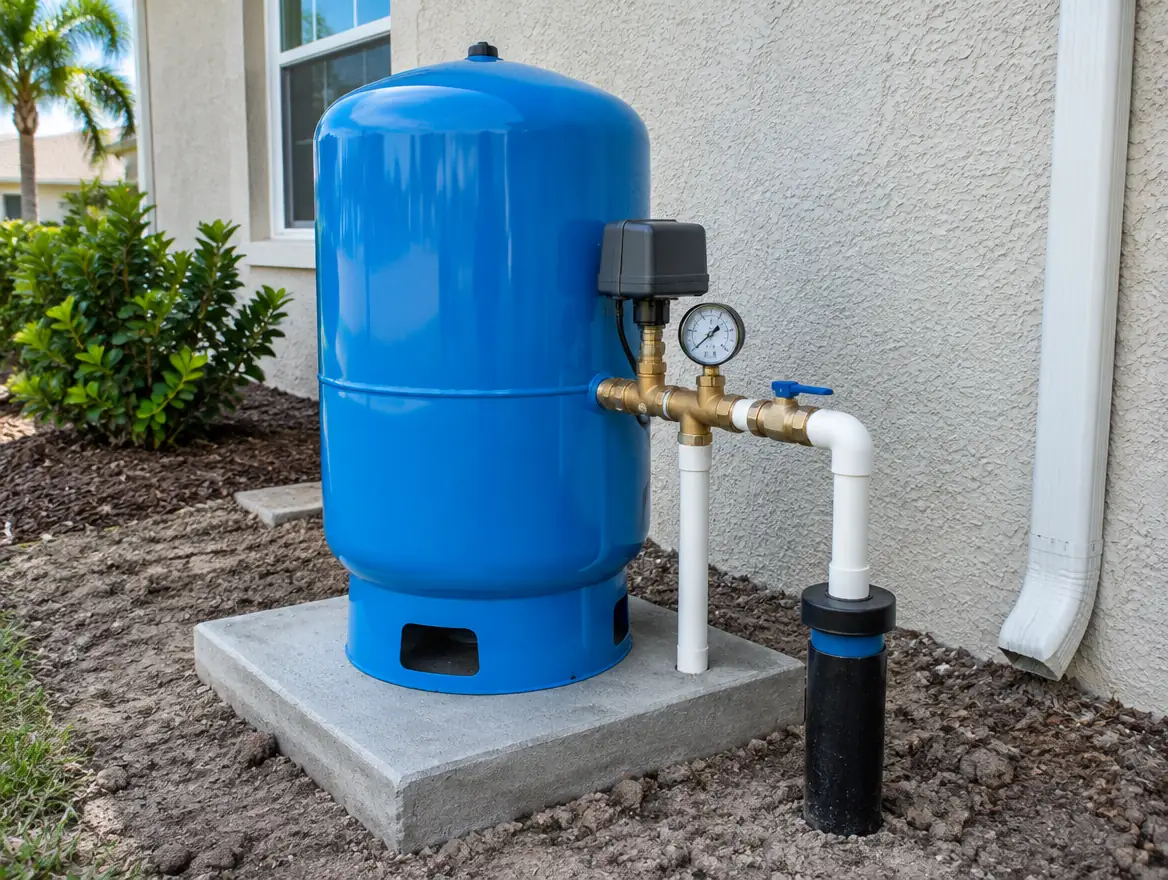
The pressure tank stores water under pressure so the pump doesn't have to start every time you open a tap. The pressure switch tells the pump when to start and stop. When either one fails, the pump works far harder than it should, and that is how a cheap tank problem turns into an expensive pump replacement.
Call (321) 220-9883Signs of a pressure tank problem
- The pump turns on and off rapidly (short cycling).
- Pressure surges and drops while a tap is running.
- Water spurts or sputters from faucets.
- The tank is leaking, rusted, or sounds full of water when you tap the top.
- Water comes out of the air valve on top of the tank. That means the bladder inside has failed.
Signs of a pressure switch problem
- The pump won't start, but power is on.
- The pump won't shut off.
- You hear buzzing or see scorch marks at the switch.
- Pressure is lower than it used to be.
Switch contacts burn and pit over time, and ants and lightning are frequent culprits in Florida. A new switch is one of the least costly well repairs.
What we can do
- Check and recharge the tank's air pressure.
- Replace a waterlogged or leaking tank, and size the new tank so the pump runs longer, less often.
- Replace the pressure switch and gauge, and set cut-in and cut-out pressures correctly.
- Check the pump for damage from short cycling.
Low pressure in the whole house?
Low pressure can also come from a clogged sediment filter, a worn pump, or a leak. If the tank and switch check out, the next step is the pump itself.
Common questions
How long does a well pressure tank last?
Many bladder tanks last 5 to 15 years. Short cycling or water from the air valve are signs the tank is near the end.
Is short cycling bad for my pump?
Yes. Every start puts wear on the motor. A pump that starts every few seconds can fail years early.
Can a pressure switch be replaced the same day?
Usually, yes. It is a common part that most well contractors carry.